
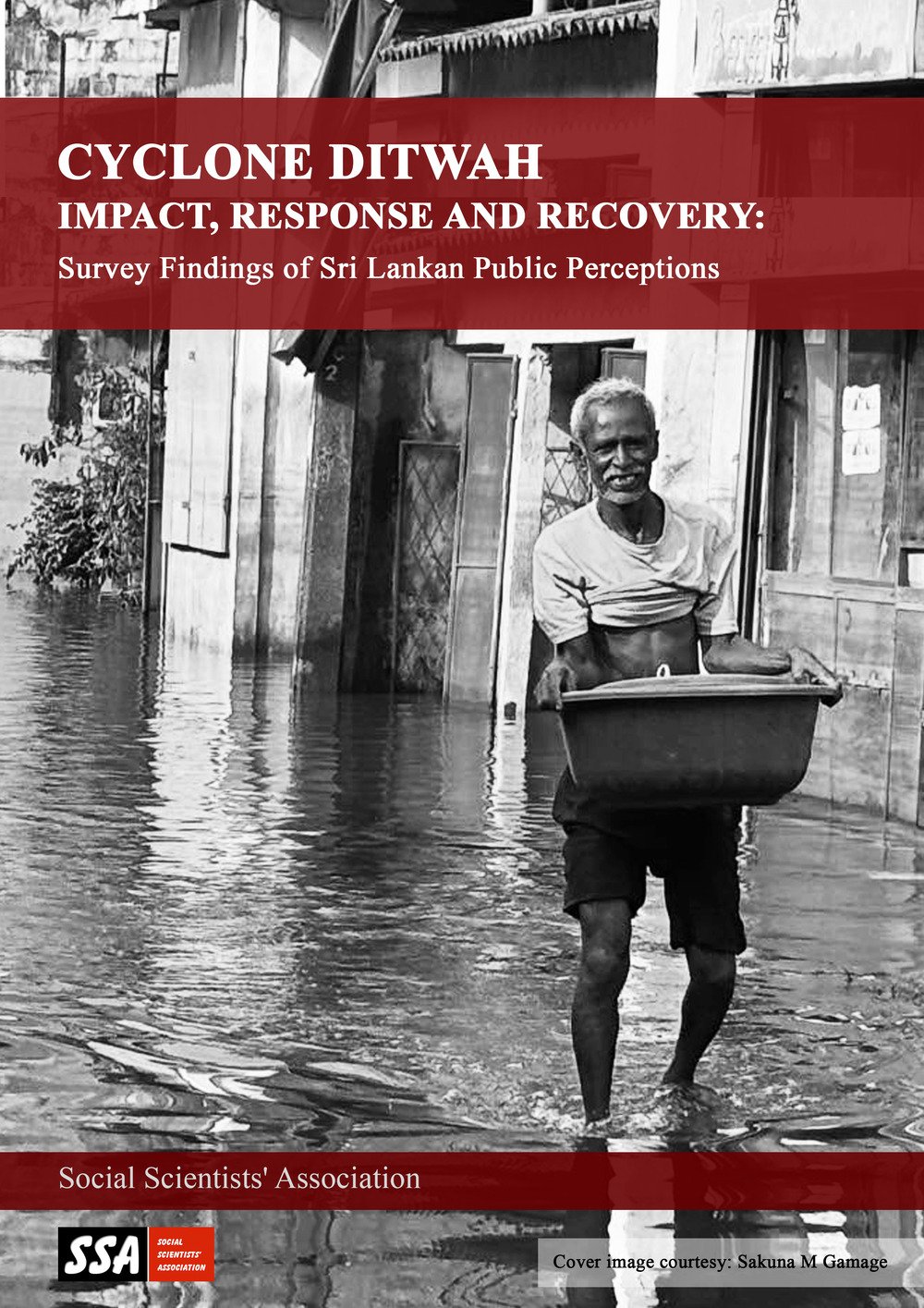
Cyclone Ditwah Impact, Response and Recovery: Survey Findings of Sri Lankan Public Perceptions
A survey conducted by the Social Scientists’ Association (SSA), Colombo, captured public experiences and perceptions following the impact of Cyclone Ditwah in Sri Lanka. The objective of the study was to examine citizens’ perceptions of institutional responsiveness following Cyclone Ditwah, with particular attention to government action, political leadership, first responders, evacuation centres, relief distribution, transparency in the management of donor funds, and factors perceived to have aggravated the cyclone’s impacts.
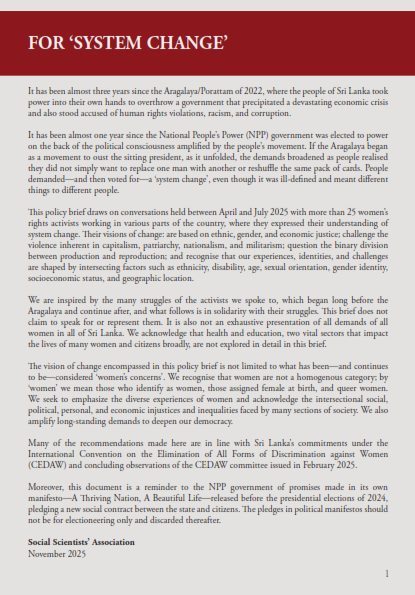
For ‘System Change’: A Feminist Agenda for Democracy and Gender Justice in Sri Lanka
What does ‘system change’ mean for women’s rights activists across Sri Lanka?
- Power, Politics and Democracy
- Debt, Food Security and Cost of Living
- Paid Work
- Truth, Justice and Reparations
- Legal Reforms
- Ecological Justice
- Violence Against Women
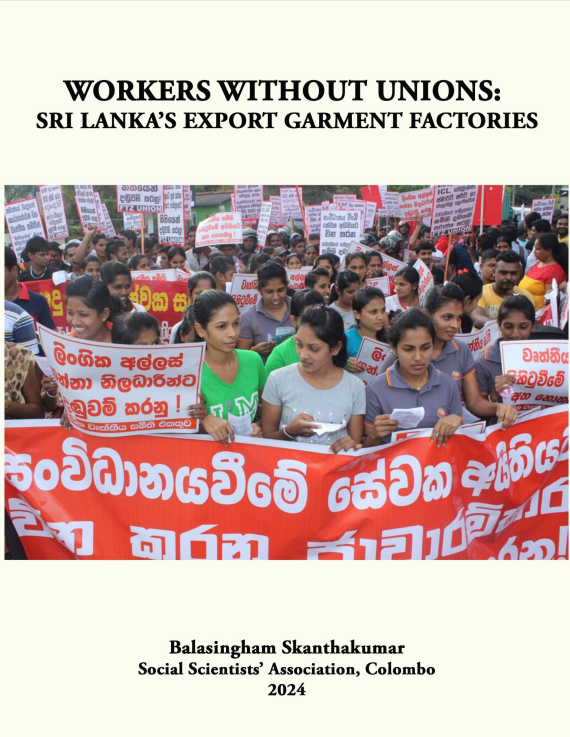
Workers Without Unions: Sri Lanka’s Export Garment Factories
What are the reasons that so few workers in the garment sector are members of trade unions, and even fewer enjoy the rights of trade union members, including freedom of association and collective bargaining? Are there any unique difficulties in unionizing garment workers in the conflict-affected Northern and Eastern regions of the island? What may be some approaches and interventions in response to known challenges in organizing the unorganized in the garment sector in Sri Lanka? These are the principal concerns of this study.
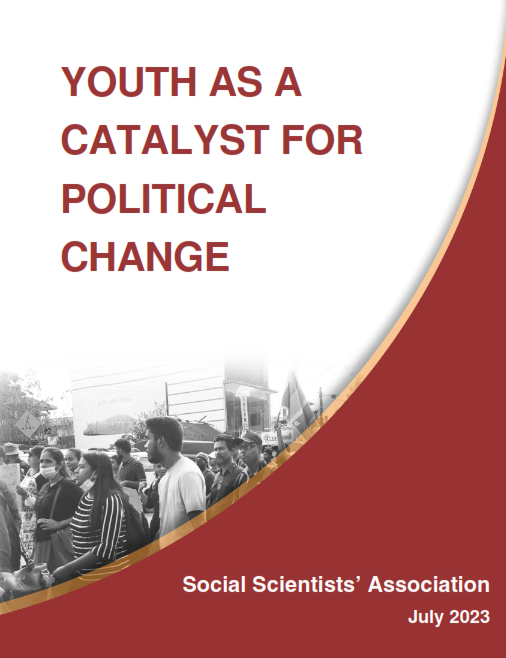
Youth As A Catalyst For Political Change
The island wide survey ‘Youth as a Catalyst for Change’ aims to assess youth perspectives on politics in general. At a time when the country is experiencing an unprecedented political and economic struggle, this study aims to inquire into the role of youth as a catalyst for strengthening democratic politics in the country. The overarching goal of this study is to understand youth’s attitudes and expectation towards democratic politics in the country.
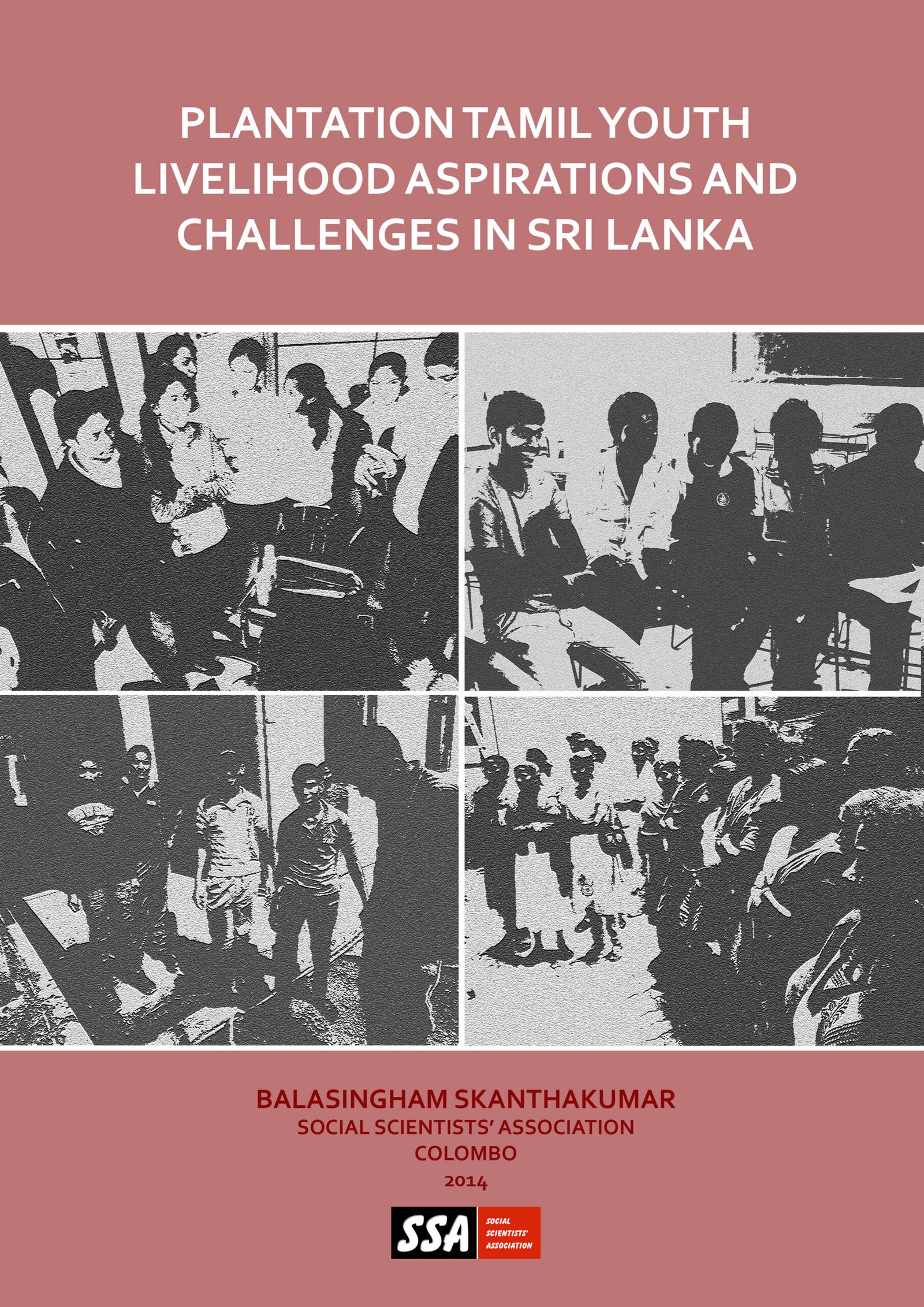
Plantation Tamil Youth Livelihood Aspirations and Challenges in Sri Lanka
Youth aspirations and their frustrations came to the forefront of official, academic, and civil society attention in Sri Lanka from the 1970s onwards (for example, International Labour Office 1971; Presidential Commission on Youth 1990). It became recognised that, outside of a small minority from the rich and the urban middle-class, young people experienced multiple forms of discrimination leading to political, economic and social exclusion from higher education, public and formal private sector employment, grants of state land for cultivation, political representation and public office, economic development, and so on. In addition, young women are subject to gender bias and subordination in a patriarchal and socially conservative society.